Nearly every house sits in one of two small grids
Two cities, two grids, a few dozen streets: the geography of musical theatre is absurdly compact.
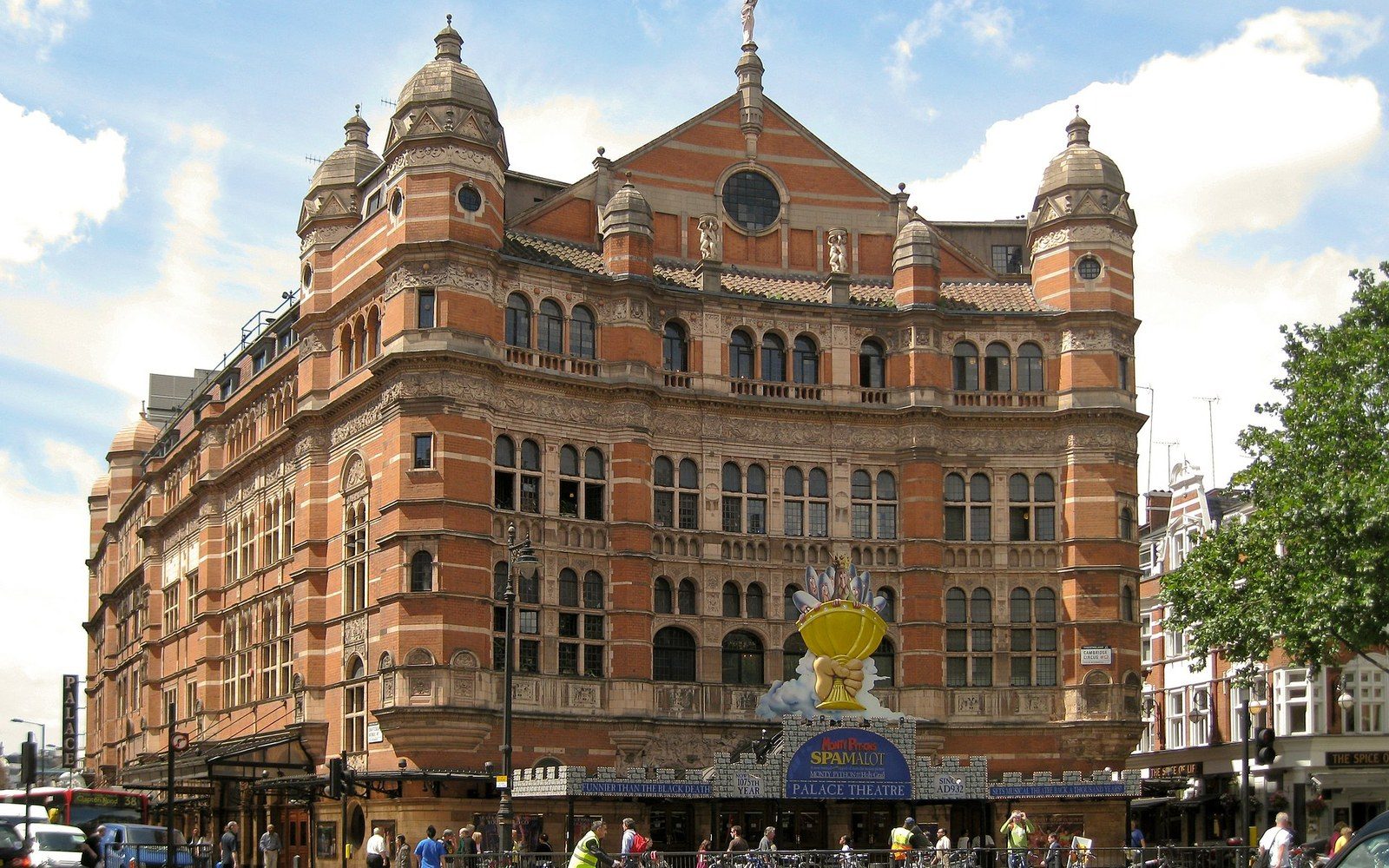
The London cluster
Shaftesbury Avenue is the spine, but the real district is a rough quadrilateral bounded by Charing Cross Road to the east, Regent Street to the west, Oxford Street to the north, and the Strand to the south. Walk that perimeter and you pass the majority of the West End’s producing houses without doubling back. The Palace Theatre anchors the northern end of Shaftesbury Avenue; the Prince Edward sits one block west on Old Compton Street. Her Majesty’s Theatre, which held The Phantom of the Opera for nineteen consecutive years, stands a short walk south on the Haymarket. Everything in between — the Lyceum, the Savoy, the Noel Coward, the Gielgud — falls within the same compact grid.
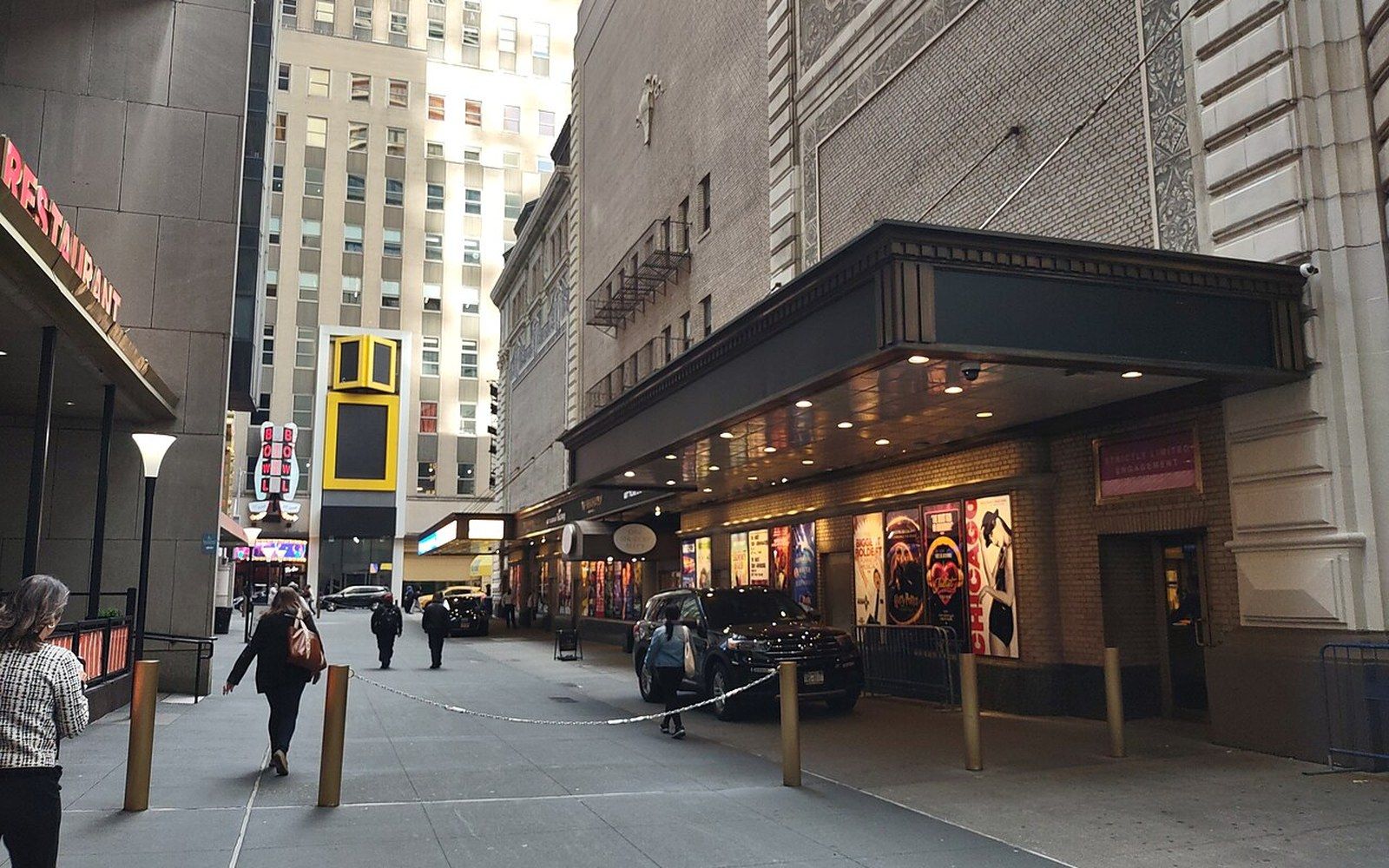
The Society of London Theatre, which coordinates the Olivier Awards and publishes the industry’s aggregate box-office data, counted 45 member theatres in the West End as of its most recent membership figures, though not all of them are musical houses. The ones that are tend to be large — a thousand seats or more — because the economics of a long-running musical require a capacity that can sustain the weekly gross against a substantial running cost. A smaller house can run a spoken-play transfer for years; it is harder to service the pit, the crew and the cast of a full-scale musical in a six-hundred-seat room.
What concentration does for a producer is reduce risk in a specific way: a show that closes early vacates its building, and another production can move in quickly because the infrastructure is already there — loading dock, flying rig, proscenium — and the audience knows how to find the street. The West End’s geography is itself a brand. Visitors arriving at a London airport know to head for the area around Covent Garden and Soho; the district’s compactness makes it legible without a detailed map.
The New York grid
Broadway, as a contractual designation, refers not to the avenue itself but to a fixed list of forty-one theatres that qualify under Actors’ Equity and the Broadway League’s definitions. The majority cluster between West 41st and West 54th streets, on the side streets running off Seventh Avenue and Eighth Avenue — a zone barely thirteen blocks long and two or three blocks wide. Times Square sits at its southern edge. The Winter Garden, which was structurally altered to stage Cats during its eighteen-year New York run, stands on West 50th Street. Most of the other houses that matter for long-running musicals — the Majestic, the St. James, the Imperial, the Shubert — are within a four-minute walk of each other.
The Broadway League publishes weekly grosses for every qualifying house, which means that the financial performance of the entire industry is visible in a single weekly table. That transparency is only possible because the industry is geographically coherent enough to be reported as a unit. Forty-one buildings in thirteen blocks produce a number; a scattered national industry could not be summarised the same way.
Why the size matters
The compactness of both districts is not an accident of zoning. It reflects the way the audience works. Theatregoers — particularly the visiting audience that sustains long runs in both cities — make a single journey to a single neighbourhood and choose among what is showing there. A show that sits outside the cluster loses the benefit of that footfall. The American Federation of Musicians negotiates minimum orchestra sizes per house, partly because the houses are discrete and enumerable; the same logic applies to the Olivier Awards and the Tony Awards, both of which define eligibility by building rather than by genre or budget. Geography is where the contract starts.
Concentration is not a limitation. It is the condition that makes the weekly gross possible.
The result is that two of the world’s largest entertainment industries operate out of districts you can cover on foot in twenty minutes. Concentration is not a limitation — it is the condition that makes the weekly gross, the long run and the transfer economy possible in the first place.